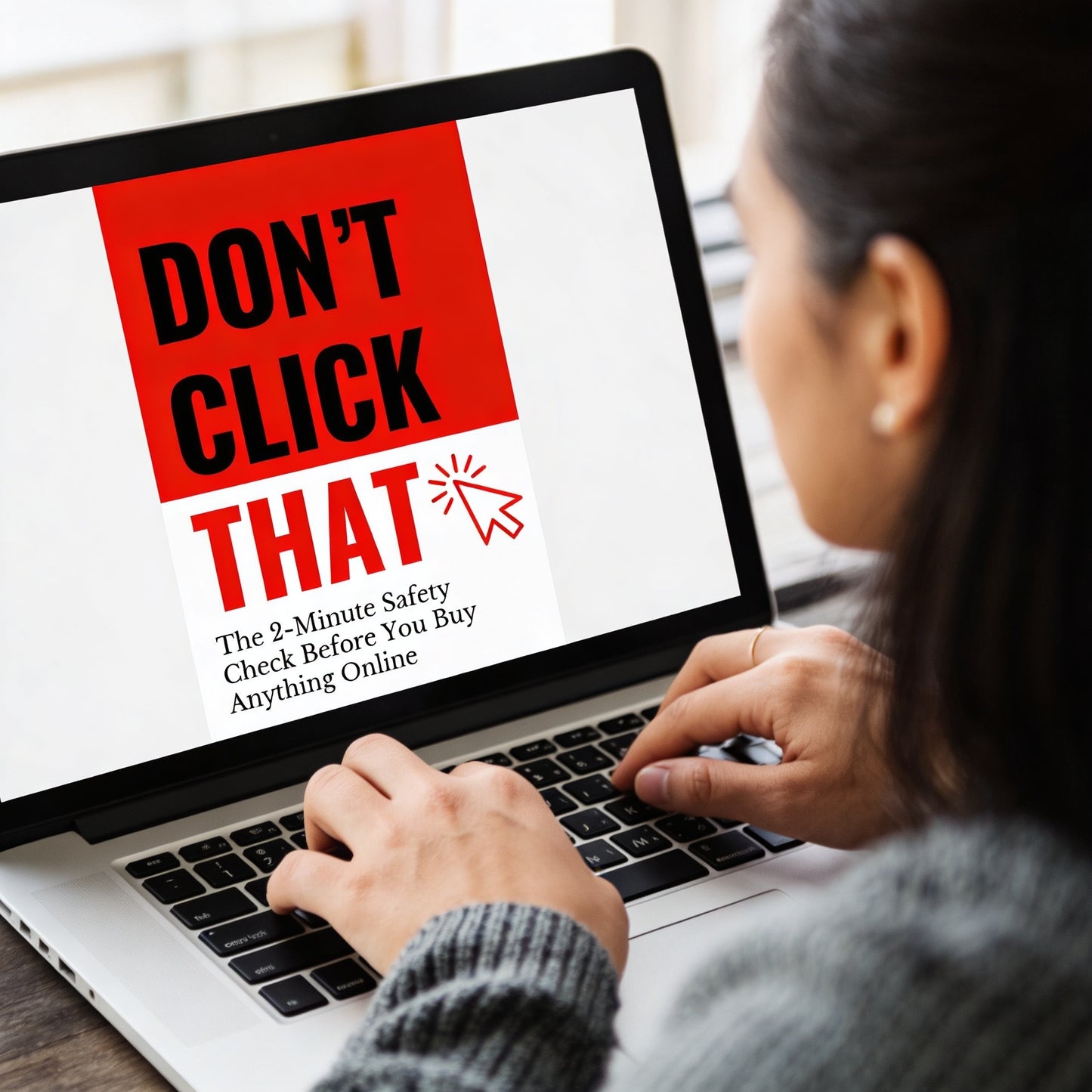
Don't Click That: The 2-Minute Safety Check Before You Buy Anything Online
Regular price
£9.99 GBP
Regular price
£35.99 GBP
Sale price
£9.99 GBP
Sale
Sold out
Taxes included.
A simple 2-minute safety check system to help you spot scams, fake websites and AI-generated content before you click, trust or buy.✔ Works instantly✔ No tech skills needed✔ Designed for everyday online useCheck in minutes. Decide with confidence.
Fake websites, emails, images and even voices can now look completely real.
Even experienced internet users are being tricked, not because they’re careless, but because the technology has changed.
You are now dealing with:
AI-written scam messages
Fake customer service chats
Realistic fake websites
Images and videos made with AI that never happened
If you find yourself thinking: “I can’t tell what’s real anymore…” you are not alone.
Reality Check
Online fraud has become one of the biggest financial threats in both the UK and the United States, and AI is now making scams far more convincing than ever before.
In the UK alone, fraud accounts for over 40% of all reported crime, with billions lost every year through online scams, fake shopping websites, phishing messages, and impersonation fraud.
In the United States, Americans lose tens of billions of dollars annually to scams and cyber fraud, with online shopping scams, fake delivery messages, and bank impersonation attacks continuing to rise year after year.
Scams Are No Longer Obvious
Millions of scam attempts now happen every single day through:
Fake parcel delivery texts
Amazon or PayPal impersonation emails
Fake banking calls
Cloned voices
AI-generated adverts
Realistic-looking websites
Many of these scams now look completely genuine.
Today’s scams can include:
AI-generated emails written to sound exactly like real companies
Fake customer support chats that appear professional and convincing
Websites built using AI that look identical to legitimate businesses
AI voice calls that sound like banks, family members, or trusted companies
AI-generated videos and adverts using realistic people, influencers, or celebrity faces
One wrong click can lead to:
Stolen bank details
Recurring subscription charges
Account takeovers
Identity theft
Financial loss
And the biggest problem is this:
Most scams no longer “look fake.”
What’s happening right now:
Millions of Americans and Britons receive scam texts, emails, or calls every week
Online shopping scams remain one of the fastest-growing forms of fraud in both countries
AI voice cloning scams are rapidly increasing, especially targeting older adults
Many people now struggle to tell the difference between real and AI-generated content online
Scammers are increasingly impersonating trusted companies like Amazon, USPS, UPS, Royal Mail, PayPal, banks, and mobile providers
Fraud experts warn that AI is making scams faster, cheaper, and far more believable than ever before
The reality is simple:
You no longer need advanced technical knowledge to create convincing scams, and that’s why awareness has become more important than ever.
The problem is not you, it’s the speed of change
Scams used to be easy to spot.
Now they are:
professionally written
emotionally persuasive
visually perfect
urgent by design
One wrong click can lead to:
stolen money
compromised accounts
long recovery processes
A simple system that puts you back in control
“Don’t Click That” is a 2-minute safety check you use before every online decision.
Before you click, buy, or trust anything online, you run a quick check.
That’s it.
No learning curve
No technical knowledge
Immediate use
It’s not just the scam; it’s how decisions are being manipulated.
Many scams push fast action, often through payment methods like bank transfers, which may offer little protection.
In fact, a large portion of scam victims report paying via bank transfer.